Can a PR or Foreigner Buy Landed Property in Singapore?
Short answer: if you are not a Singapore citizen, and that includes Permanent Residents (PRs), landed residential property on the mainland is restricted property under the Residential Property Act. You can buy it, but only with approval from the Land Dealings Approval Unit at the Singapore Land Authority. For PRs, approval is realistic but never automatic. For foreigners who are not PRs, approval on the mainland is granted only in exceptional cases. Sentosa Cove is the one place where the rules work differently.
That is the whole answer. The rest of this page is the detail that decides whether your particular purchase actually happens.
What counts as restricted property
● Vacant residential land
● Terrace houses, including inter-terrace and corner terrace
● Semi-detached houses
● Bungalows and detached houses
● Strata landed houses that are not within an approved condominium development
What is not restricted
● Condominium units and apartments in approved developments
● Strata landed houses that sit within an approved condominium development, which is why some cluster houses are open to foreign buyers and others are not
● Executive condominiums, subject to their own separate eligibility conditions
If a house is not restricted, none of the approval process below applies to you. Establishing which category a property falls into is the first thing to do, before you fall in love with it.
The PR route: what is actually assessed
A PR applies to the Land Dealings Approval Unit (LDAU) and the application is assessed on your contribution to Singapore. In practice, that means your professional or academic qualifications, your employment and income, the tax you have paid here, how long you have been a Permanent Resident, and your family ties to the country. Length of residence carries real weight, and applications from very recent PRs are commonly unsuccessful.
Approval, when granted, comes with conditions. The standard ones are that you occupy the property yourself and that you do not rent out the whole house. You can normally sublet rooms while living there, but treating the property as a pure investment is not what the approval is for.
If you are a foreigner without PR status
On the mainland, approval is rare. It is granted on the basis of exceptional economic contribution to Singapore, and the bar is high. If you are in this position and set on landed, the realistic options are Sentosa Cove, a strata landed house inside an approved condominium development, or waiting until your PR status and residence history give you a case worth making.
I would rather tell you that at the start than take you to viewings for six weeks.
Sentosa Cove
Sentosa Cove is the exception written into the framework. Foreigners, PR or not, can buy landed homes there. Approval is still required, but it is assessed on a different footing and is granted far more readily than a mainland application. The conditions are owner-occupation, and you cannot rent the whole property out.
Stamp duty: the number that decides most of this
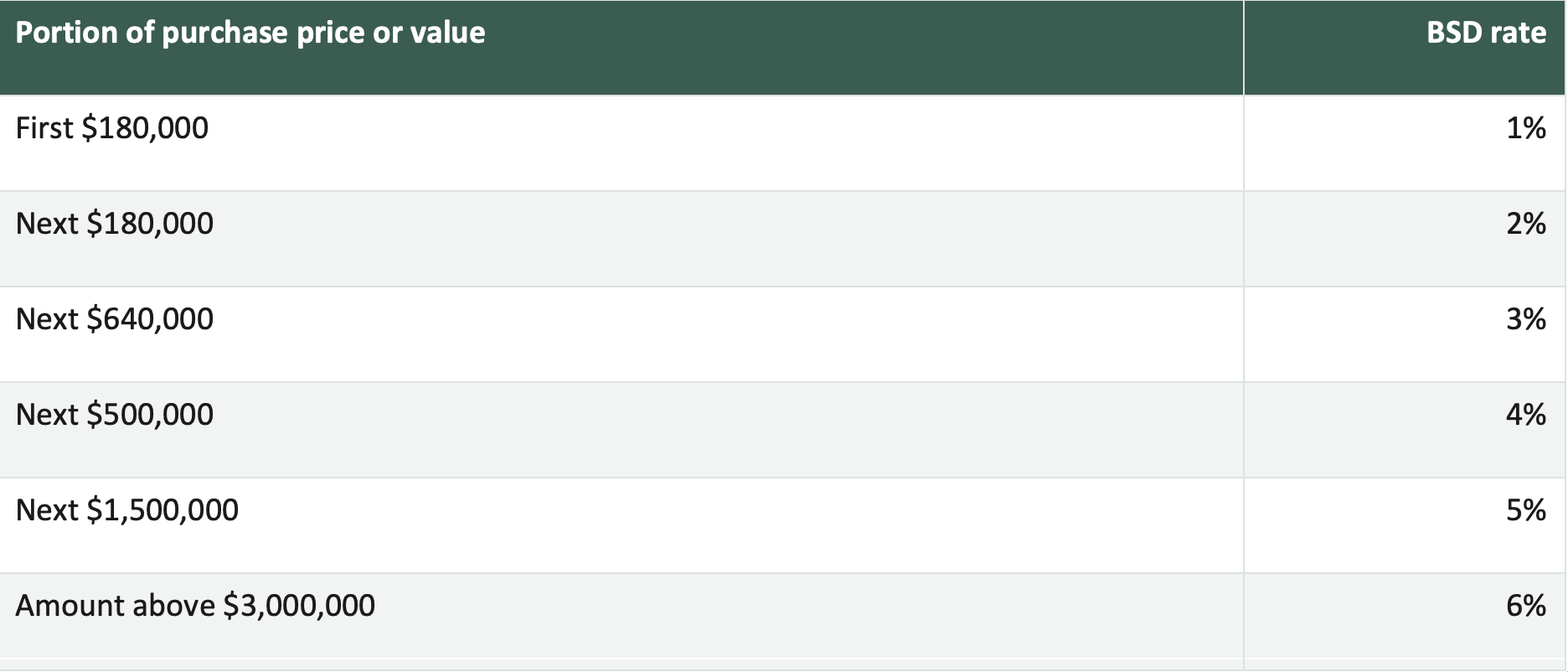
Buyer's Stamp Duty applies to everyone and is progressive, so on landed quantums the top tiers do most of the damage.
Additional Buyer's Stamp Duty sits on top, and this is where residency status changes the arithmetic entirely.
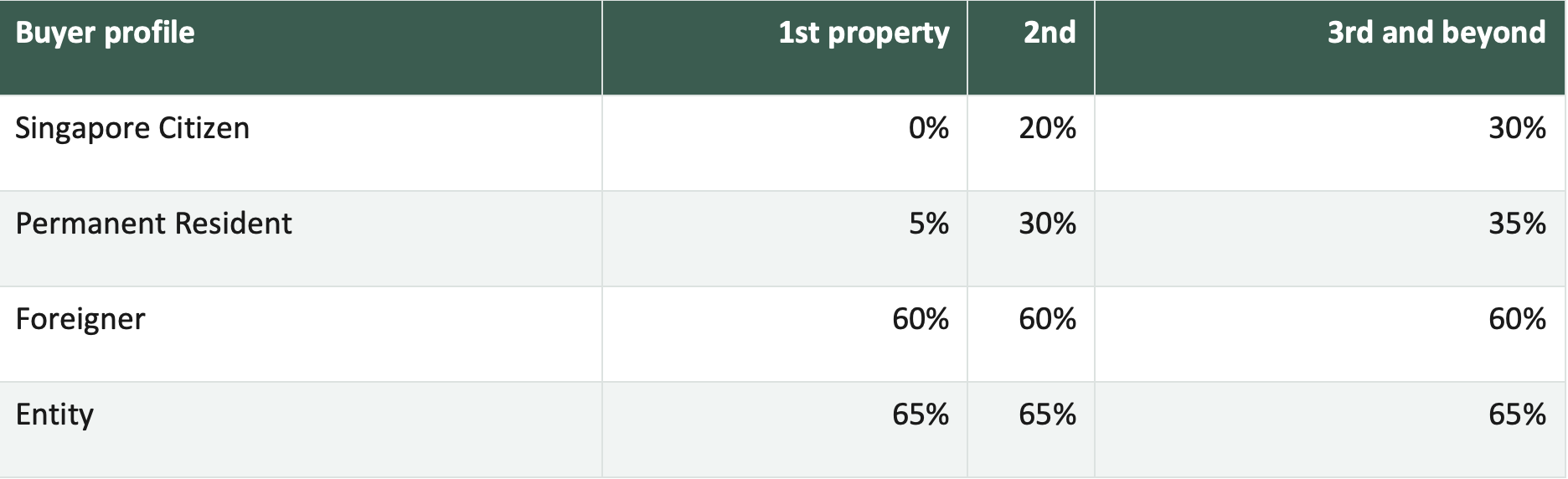
Work it through on a $5,000,000 landed home. A Singapore Citizen buying their first residential property pays $239,600 inBSD and no ABSD. A PR buying their first residential property pays the same BSD, plus 5% ABSD — $250,000, bringing the total stamp duty to $489,600. A foreigner pays the same BSD plus 60% ABSD — $3,000,000, bringing the total stamp duty to $3,239,600. That last figure is not a tax to be planned around. It is the policy telling you the answer.
A detail worth knowing if you hold certain passports
Under free trade agreements, nationals of the United States and nationals of Iceland, Liechtenstein, Norway and Switzerland receive the same stamp duty treatment as Singapore citizens. This is genuinely valuable and often missed.
It does not, on its own, remove the Residential Property Act approval requirement for restricted property. Stamp duty treatment and purchase eligibility are two separate questions. If you are in this group and looking at landed, get both confirmed in writing before you commit to anything.
The thing that actually goes wrong: timing
Approval takes weeks or months, not days. The transaction timeline does not wait for it.
Here is the trap. You view a house, you like it, the seller wants a decision, you pay the option fee and sign an Option to Purchase (OTP). The option period is typically short. If your approval has not come through by the time you must exercise, you are choosing between walking away and forfeiting your option fee, or exercising a purchase you may not be permitted to complete.
The way to avoid it is unglamorous and it works:
1. Establish before you view whether the property is restricted at all.
2. Start the approval application as early as your circumstances allow rather than after you find a house.
3. Engage a conveyancing lawyer before you sign anything, not after.
4. Have your lawyer address the approval condition in the option terms, so an unsuccessful application is not a forfeited deposit.
5. Do not let urgency from a seller or an agent, including me, push you into signing ahead of this.
What I do for buyers in this position
I check the property's restricted status and the tenure before we view, so we are not wasting your weekends. I tell you honestly whether your profile has a realistic case, based on what actually gets approved rather than on what would be convenient for me. I coordinate the sequencing with your conveyancing lawyer so the option terms protect you. And if the honest answer is that landed is not available to you yet, I will say so and we will look at what is.
Send me your situation and the address you are curious about, and I will tell you where you stand before you spend anything.
This page is general information, not legal or tax advice. Eligibility rules and stamp duty rates change. Confirm your position with the Singapore Land Authority, IRAS and a conveyancing lawyer before you commit.